Your Creative Blueprint: The Canva ECourse Workbook Ebook Explained
In the world of digital creation, an idea is only as powerful as its presentation. Whether you're guiding students through a course, sharing a collection of recipes, or teaching a skill, you need a structure that feels both professional and personal. This is where the concept of a Canva ECourse Workbook Ebook comes into play. It's not just a template; it's a foundational toolkit designed for anyone who has a system to teach or a sequence of information to share.
Think of it as your digital binder. Instead of starting from a blank page and wrestling with layout decisions for every chapter, you begin with a pre-built framework. This framework includes all the pages a cohesive digital book needs: covers, introductions, module breaks, content layouts, and spaces for interaction like worksheets. The core value lies in its structure. You pour your expertise into the ready-made containers, saving you the immense time and creative energy typically spent on design consistency.
Where This Workbook Template Transforms Your Projects
The utility of this template shines in real-world scenarios. Let's move beyond features and look at the situations where it becomes an indispensable asset.
For the Educator Transitioning Online
Imagine a yoga instructor who wants to offer a sequenced "Mindful Morning" e-course. Her knowledge is deep, but her design time is limited. With a Canva ECourse Workbook Ebook template, she can quickly populate the module intros with her philosophy, fill the lesson pages with step-by-step pose guides, and use the worksheet pages for reflection journals her clients can print out. The consistent layout across all lessons makes her course feel authoritative and easy to follow, elevating her digital offering from a casual email series to a polished, productized experience.
For the Community Leader Building Resources
A leader in a gardening club wants to compile a year-round planting guide for their members. The template’s section intros and content chart pages are perfect for breaking down information by season. They can use the resource pages to list trusted seed suppliers and the worksheet layouts for members to plot their garden grids. The result is a visually uniform, shareable ebook that serves as a lasting reference, strengthening the community's shared knowledge base.
For the Chef or Food Blogger Monetizing Knowledge
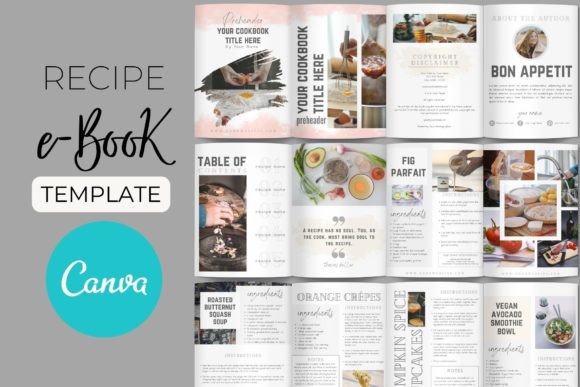
This is where the cookbook application comes directly into focus. A home chef with a beloved collection of family recipes can use the same structural principles to create a stunning digital cookbook. The table of contents intro pages help categorize recipes by meal type, the lesson intro layouts can become recipe chapter openings, and the quote pages are ideal for sharing personal stories behind a beloved dish. It turns a scattered collection of recipes into a curated, sellable product.
How Different Users Harness the Same Framework
The beauty of a structured template is that it serves different needs based on the user's goal. Its benefit is not one-size-fits-all; it’s one-structure-fits-many-purposes.
The Solo Creator benefits from efficiency. Their primary gain is time. They avoid the frustration of inconsistent fonts and misaligned pages. Their focus remains entirely on their content—the lessons, the recipes, the instructions—which is their true value proposition. The template handles the aesthetic unity, allowing them to produce a quality digital product without being a graphic designer.
The Small Business or Team benefits from cohesion. When multiple people are contributing chapters or modules, a common template ensures everyone's work fits together seamlessly. The brand look is maintained throughout, from the cover variations to the thank you pages. It acts as a style guide, eliminating back-and-forth revisions and creating a professional final compilation.
The Creative Selling Digital Products benefits from scalability. Once familiar with the template's flow—how the intro pages lead into content, how worksheets follow lessons—they can replicate the process for new ebooks or courses rapidly. This systematizes their creative output, turning it from a one-off project into a repeatable part of their business model.
Practical Considerations Before You Begin
Jumping in with a template is exciting, but a moment of planning ensures you harness its full potential. A few practical observations can set you up for success.
First, content readiness is key. The template is a vessel. Have your core material—the text, the key images, the lesson sequences—organized before you start populating pages. Dragging and dropping is simple, but doing it with a clear content outline prevents mid-project stalls.
Second, understand your audience's journey. Map out how a user will progress through your ebook or course. Where do they need a summary? Where would a worksheet provide the most value? The template provides spots for these elements; you decide their placement based on your reader's learning path. This user-centric thinking makes the final product more engaging and effective.
Finally, embrace the basic customization the template allows. You can change colors to match your brand, swap images, and resize elements. This is where that BASIC knowledge of Canva—dragging, dropping, moving—is entirely sufficient. The design intelligence is built-in; you are applying your personal touch. Don't feel you need to overhaul the structure. Its proven layout is often its greatest strength.
Recognizing the Scope and Strength
A template like this is a powerful starting point, but it's important to recognize its context. Its strength is in providing a comprehensive, logical structure for sequential, educational, or compilation-style content. It excels at creating a feeling of progression and completion.
A potential consideration is that it is designed for linear content. If your project is a single-page infographic or a non-sequential portfolio, this specific workbook framework might not be the ideal fit. It’s built for projects that have a beginning, a middle, and an end, with chapters or modules along the way.
Furthermore, while it includes upsell and thank you pages—crucial for business applications—its core function is content delivery. The marketing elements are included as smart additions, but the heart of the template is the clean, organized presentation of your knowledge.
Turning Your Knowledge into a Tangible Asset
In essence, a Canva ECourse Workbook Ebook template is more than a design shortcut. It’s a methodology packaged into a visual format. It answers the question, “How should I organize this?” for anyone creating a digital guide, course, or collection.
From the yoga instructor’s morning routine to the gardener’s seasonal guide to the chef’s cherished recipes, the template performs the same vital service: it structures scattered expertise into a coherent, navigable, and professional digital book. It allows the creator to focus on what they know best, while trusting the framework to present that knowledge with clarity and style. Your expertise deserves a worthy container. This template provides that container, ready for you to fill with your unique value.