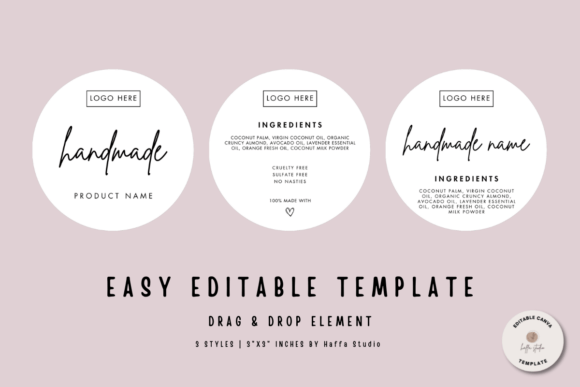
Design Clean Labels with Canva Minimalist Ingredients Template
In the world of design and small business, clarity often speaks louder than decoration. The Canva Minimalist Ingredients Label template embodies this principle perfectly. It is a digital tool designed to help you create clear, professional-looking labels for your products, promotions, or projects. As a purely digital item, you receive a template file to edit online in Canva—no physical shipment is involved.
This approach is ideal for modern creators who value speed, simplicity, and adaptability. You are not locked into a single-use graphic; you own a flexible starting point. Whether you're packaging homemade candles, organizing workshop materials, or branding a new line of artisan foods, this template provides the structured foundation you need, while leaving all the creative control firmly in your hands.
The Power of a Minimalist Label Design
Why choose a minimalist style? In a crowded visual landscape, simplicity cuts through the noise. A clean ingredients label doesn't just list components; it communicates transparency, quality, and intentionality. It tells your audience that you care about the essentials. This Canva template offers that clean aesthetic—a balanced layout with clear sections for headings, information, and branding—ready for you to personalize.
The utility goes far beyond literal ingredients. The structure is a versatile canvas. The "ingredients" area could be a list of features, a schedule of events, key bullet points for a service, or even a poetic manifesto for a creative project. The design's strength is its semantic flexibility; it organizes information with authority and grace.
Creative Applications and Project Ideas
Think of this template as your design shortcut for anything that benefits from a clean, listed presentation. Here are several practical applications to spark your process.
For Physical Products & Small Businesses
Obviously, it’s perfect for actual product labels. Entrepreneurs making skincare, spices, teas, or baked goods can quickly generate compliant, attractive labels. Use the text fields to list ingredients, net weight, and your brand story. By clicking the "duplicate page" button in Canva, you can create a whole product line with consistent branding in minutes. But also consider it for:
- Workshop or Kit Instructions: Label the contents of a DIY craft kit or educational packet.
- Branded Merchandise Tags: Create hangtags for tote bags or apparel that detail material composition.
- Subscription Box Cards: Include a card in monthly boxes that lists the month’s curated items.
For Digital Creators & Educators
The output is a printable file, but its use can bridge digital and physical. Educators can design labels for classroom resource bins or science experiment kits. Bloggers and content creators might print labels for giveaway packages or photo prop styling. Furthermore, the final designed label itself can become a digital asset:
- Social Media Graphics: Adapt the label into a square post showcasing a "Recipe for Success" or "Ingredients of a Great Blog Post."
- E-commerce Product Images: Incorporate the label design directly into your online product photos to build trust.
- Presentation Slides: Use the layout as a clean visual for breaking down complex topics into core components.
For Personal Projects & Organization
Minimalist design isn't just for public-facing items. Use this template to bring order and style to your personal space.
- Home Organization Labels: Design labels for spice jars, pantry containers, or storage boxes with contents and dates.
- Event Favors: Create elegant tags for wedding favor jars or party gift bags.
- Artistic Statements: Frame a printed label as a piece of conceptual art listing the "Ingredients of My Day" or "Components of Creativity."
How to Adapt the Template for Your Audience
Your audience dictates your customization. The technical steps are simple in Canva: change text font, color, and size; import your logo or images as JPG, PNG, or SVG. The creative thinking involves aligning those choices with who you're speaking to.
For a Professional, B2B Audience
Stick to crisp, classic fonts like sans-serifs. Use a restrained color palette, perhaps your corporate blues or grays. The logo placement is key. Emphasize clarity and precision in your text. The label should feel like a datasheet—trustworthy and efficient.
For a Consumer, Lifestyle Audience
Here you can inject more personality. Consider a gentle script font for your product name. Use warmer colors or pastels. Integrate a small, charming illustration or icon instead of a stark logo. The language on the label can be more inviting, perhaps using phrases like "Made With" instead of just "Ingredients."
For a Creative, Community Audience
Experiment boldly. The minimalist framework will keep your design from feeling chaotic. Use vibrant colors or unexpected font pairings. Your "ingredients" list might include abstract concepts. This adaptation turns the template into a poster or badge of identity for your community.
Remember, the 3" x 3" label size is a standard, versatile format. Whether printing at home on adhesive paper or sending the file to a professional printer like Vistaprint or a local shop, this size is widely supported.
Balancing Creativity with Clear Communication
While personalization is encouraged, the core goal of a label is to communicate effectively. As you edit your Canva Minimalist Ingredients Label, keep these practical guidelines in mind.
Hierarchy is Everything: Use font size and weight to make the most important information (product name, key ingredient) stand out visually. The template provides the structure, but you enforce the hierarchy.
Consistency Builds Trust: If you're creating a product line, use the duplicate function and then change only the necessary text and perhaps a color accent. Keeping the layout identical across items creates a cohesive, reliable brand image.
White Space is a Feature: The minimalist design relies on clean areas around text. Don't feel compelled to fill every pixel. This space enhances readability and gives your design a premium feel.
Test Your Legibility: Before finalizing, view your design at a small scale, simulating how it will look once printed. Ensure all text, especially small disclaimer text, is still readable.
The Practical Workflow: From Purchase to Print
Understanding the process removes any uncertainty. After purchase, you receive a .zip file containing a PDF with links to access the template in Canva. You need only a FREE Canva account and a web browser—Chrome or Edge are preferred for optimal performance.
Inside Canva, you'll find the editable label template. If you're new to Canva, detailed instructions are typically provided, but the platform itself is intuitive. You click on text to edit, use the toolbar to change fonts and colors, and upload your assets via the "Uploads" tab. There are no expiration limits or download caps on your editing.
Once your design is complete, you download it as a high-quality PDF or image file. This file is your final asset. You can print it at home, or take it to a Staples, Office Depot, or any print service. The design is yours, and the template is a reusable tool for future projects.
Ultimately, the Canva Minimalist Ingredients Label is more than a label maker. It is a design mindset packaged into an accessible digital tool. It encourages you to focus on what matters—clear information, honest presentation, and a touch of your unique style. For the creator, entrepreneur, or organizer looking to produce something both beautiful and functional, it provides the perfect starting point, leaving you free to define what your ingredients truly are.